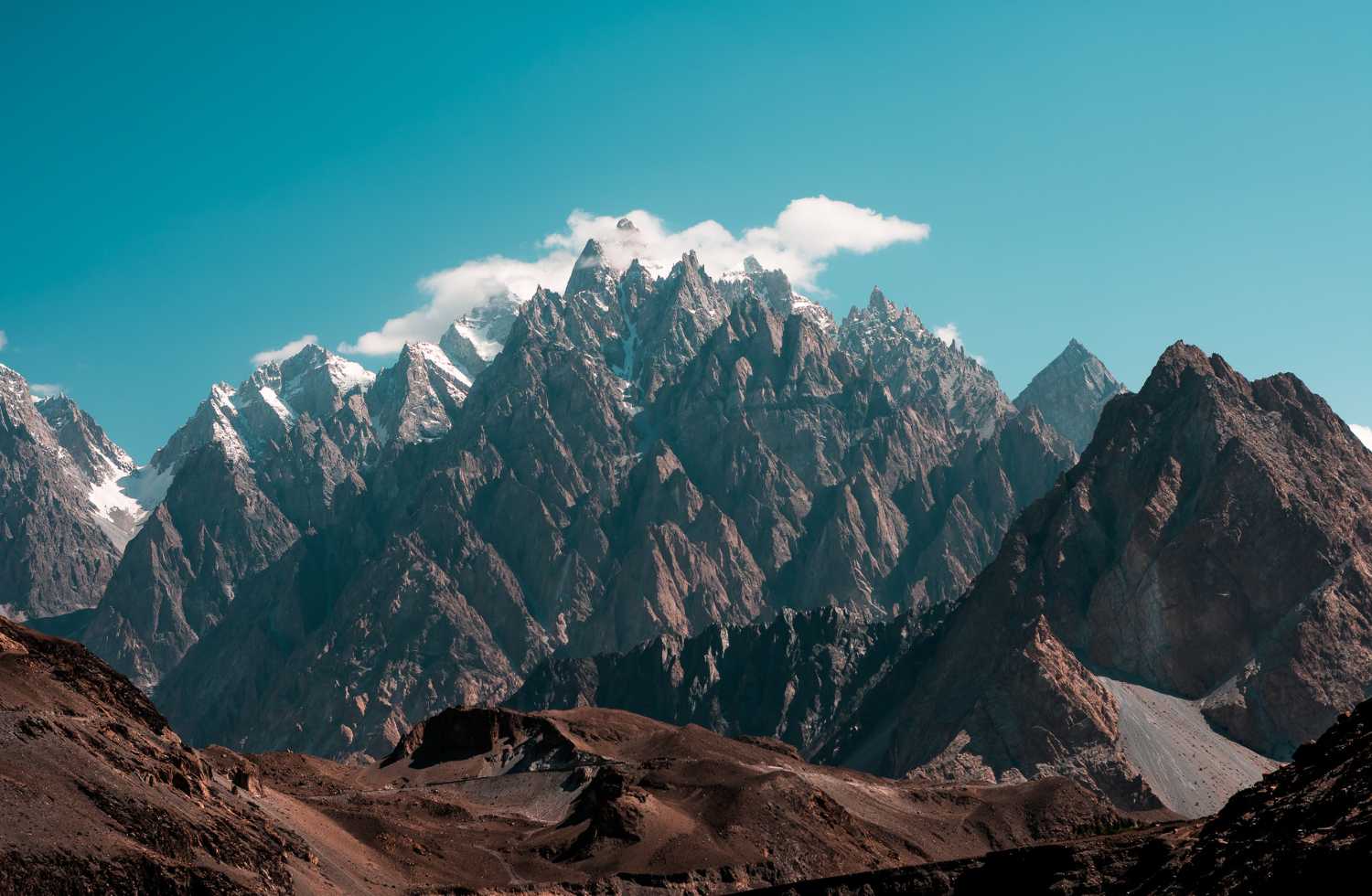
Pakistan’s northern frontier contains the most intense concentration of extreme-altitude peaks on Earth, serving as the ultimate proving ground for global mountaineers and adventure tourists. The convergence of the Karakoram, Himalayan, and Hindu Kush mountain ranges creates an unparalleled ecosystem for high-altitude trekking, white-water rafting, and technical climbing.
The Five “Eight-Thousanders”
Pakistan hosts five of the fourteen global mountains that exceed 8,000 meters in elevation. Attempting these peaks requires elite technical skill, extensive logistical planning, and absolute physical endurance.
| Peak Name | Elevation | Mountain Range | Operational Significance |
| K2 (Godwin-Austen) | 8,611m (28,251 ft) | Karakoram | The second-highest mountain globally; notoriously dangerous due to extreme, unpredictable weather and severe vertical climbs. |
| Nanga Parbat | 8,126m (26,660 ft) | Himalayas | Known as the “Killer Mountain,” it features the colossal Rupal Face, the highest unbroken mountain wall in the world. |
| Gasherbrum I | 8,080m (26,509 ft) | Karakoram | A highly remote peak that requires a grueling, multi-day trek up the Baltoro Glacier simply to reach base camp. |
| Broad Peak | 8,051m (26,414 ft) | Karakoram | Features a massive, mile-long summit ridge; frequently utilized as a preparatory acclimatization climb before attempting K2. |
| Gasherbrum II | 8,035m (26,362 ft) |
The Broader Adventure Ecosystem
You do not need to be a professional alpinist to extract value from this region. The infrastructure surrounding these massive peaks supports a thriving adventure tourism network. Trekking to Concordia—the glacial confluence known as the “Throne Room of the Mountain Gods”—offers an unhindered 360-degree view of four 8,000-meter peaks without requiring ice axes or ropes. For water-based expeditions, the turbulent Indus and Hunza rivers provide aggressive Class IV and V white-water rafting directly through deep, rocky gorges.
Key Takeaway Action Checklist
- [ ] Secure Official Permits: High-altitude treks and restricted zone entries require strict government clearance; initiate this paperwork months in advance through a registered local operator.
- [ ] Mandate Acclimatization: Never rush altitude. Build non-negotiable rest days into your itinerary to prevent acute mountain sickness once you cross the 3,000-meter threshold.
- [ ] Leverage Local Expertise: Hire experienced local Balti or Wakhi guides. Their innate understanding of sudden micro-climate shifts and glacial terrain is your primary safety net.
- [ ] Audit Expedition Gear: Prepare for violent temperature swings. Valley approaches can be intensely hot during the day, while glacier camps plunge well below freezing at night.
Top 4 Adventure Places to Visit in Pakistan – Top Guide 101
K2
K2 commands a level of respect that surpasses even Mount Everest. Straddling the remote border between Pakistan’s Gilgit-Baltistan and China’s Xinjiang region, it offers two entirely distinct realities: a world-class trekking destination for adventure tourists and a highly technical, often lethal proving ground for elite alpinists.
The Reality of the “Savage Mountain”
While Everest often suffers from commercial overcrowding, K2 remains wild, steep, and strictly unforgiving. Its pyramid-like structure exposes climbers to relentless storms and severe avalanche paths. The international and local visitors who flock to the region rarely intend to summit; instead, they endure a grueling expedition merely to stand at its base.
The Journey to Base Camp
The primary attraction for non-climbing tourists is the K2 Base Camp trek. This multi-week journey requires navigating the Baltoro Glacier, a massive, shifting river of ice. The trek culminates at Concordia, a glacial intersection offering an unhindered, 360-degree panorama of the Karakoram range, widely considered the greatest natural viewing gallery on Earth.
| Experience Level | The Objective | Logistical Reality |
| Adventure Tourist | K2 Base Camp (5,150m) | Requires a 14-day round-trip glacier trek, strict acclimatization days, and a fully supported local porter crew. |
| Elite Alpinist | K2 Summit (8,611m) |
Key Takeaway Action Checklist
- [ ] Train for the Terrain: Prepare for the Base Camp trek by hiking rough, uneven trails with a heavily weighted pack for months prior to your arrival.
- [ ] Secure Border Permits: Entering this restricted military border zone requires specialized trekking permits that must be managed exclusively through registered Pakistani tour operators.
- [ ] Prepare for Absolute Isolation: Unlike the commercialized Everest circuit, the K2 trek features zero permanent teahouses; you must camp directly on the glacier for multiple consecutive nights.
- [ ] Buffer Your Itinerary: Build extreme flexibility into your travel schedule, as flights into Skardu (the primary launch city) are routinely grounded due to sudden, violent storms.

Nanga Parbat
Nanga Parbat earns its notorious “Killer Mountain” moniker by combining extreme altitude with highly unpredictable, localized storm systems. Serving as the massive western anchor of the Himalayas, this peak rises dramatically above the Indus River valley, creating one of the most severe vertical drops on the planet.
The Vertical Reality of the Rupal Face While mountains like Everest offer gradual slopes during the initial ascent, Nanga Parbat features the Rupal Face—a sheer, 4,600-meter (15,000-foot) wall of rock and ice. This unbroken vertical wall is the highest on Earth and demands elite technical ice-climbing skills from the very first day of the expedition, offering absolutely no margin for error.
Weather and Microclimates The mountain’s isolated position outside the main Himalayan cluster exposes it to sudden, violently shifting weather patterns.
- Rapid Storm Generation: The extreme temperature contrast between the deep, arid Indus River gorge below and the glaciated peak above creates spontaneous, hurricane-force blizzards.
- Avalanche Corridors: The steep gradient of the mountain’s Diamir Face constantly sheds massive ice seracs, creating highly unpredictable and lethal avalanche paths.
- Winter Extremes: The peak remained entirely unclimbed in winter until 2016, strictly due to the lethal combination of minus-40-degree temperatures and relentless wind chill.
Trekking the Fairy Meadows You do not need to be a professional alpinist to experience the sheer scale of Nanga Parbat. The approach via the Fairy Meadows offers one of the most accessible and visually striking treks in northern Pakistan.
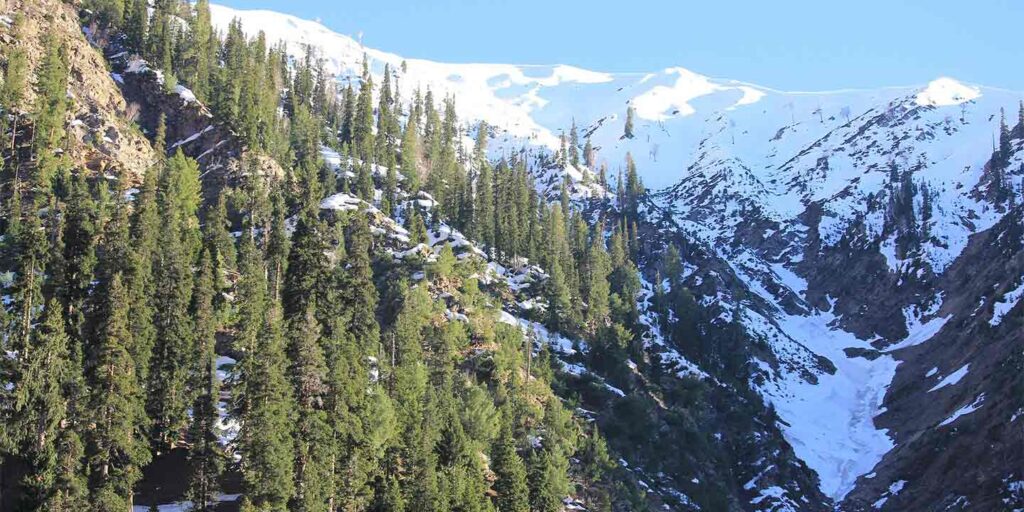
- The Approach: Reaching the base requires a famously nerve-wracking jeep ride up a cliffside dirt track, followed by a moderate hike through dense alpine pine forests.
- The Viewpoint: The meadows provide a safe, lush green amphitheater positioned directly in front of the mountain’s towering Raikot Face, allowing you to view the glaciers from a secure distance.
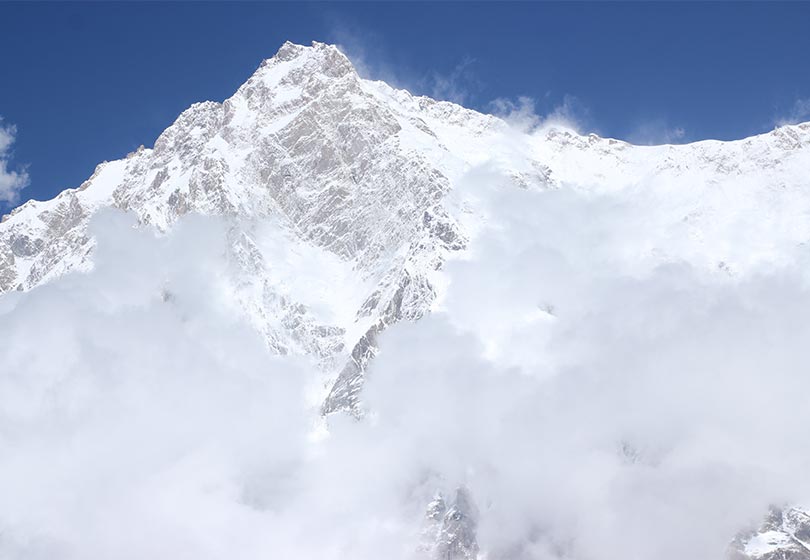
Pakistan’s northern frontier offers an unparalleled intersection of extreme-altitude mountaineering and world-class local hospitality. The region serves as a premier destination for both elite alpinists and adventure tourists seeking access to some of the highest peaks on Earth.
The Strategic Advantage of Local Hospitality
While the Karakoram and Himalayan ranges provide the primary geological draw, the local infrastructure guarantees expedition success. Navigating the extreme environments surrounding K2 and Nanga Parbat requires extensive logistical support. The local communities provide deeply ingrained, first-class service networks that transform a harsh, isolated environment into a highly accessible adventure hub. You are not just visiting a mountain range; you are entering a region built to welcome and protect global travelers.
| Expedition Element | The Draw | The Reality |
| The Terrain | K2 and Nanga Parbat. | The highest concentration of extreme-altitude peaks globally, demanding strict respect and preparation. |
| The Culture | Legendary local hospitality. | Deeply ingrained support networks eager to welcome and assist international travelers. |
| The Service | High-altitude logistics. |
Key Takeaway Action Checklist
- [ ] Define Your Objective: Decide whether you want to tackle technical glacial ascents or simply view the massive peaks from the safety of accessible valleys.
- [ ] Engage Local Experts: Hire local guides to secure your navigation safety, manage complex permits, and experience authentic regional hospitality.
- [ ] Respect the Environment: Treat the pristine mountain ecosystem and the local communities with the exact same level of respect they extend to you.
- [ ] Expand Your Knowledge Base: Study the detailed history and logistical requirements of Pakistan’s greatest mountains on the Top Guide 101 travel blog before finalizing your itinerary.

See our AMCOB Business Profile
Quick Access Links: Job Portal| TopSkills365| Learning Alliance Interpreting| Learning Alliance Tutoring| WorldWide Access Staffing| TopGuide101.com
TopGuide101 Powered by 360* Interlink Ecosystem
©2025 TopGuide101. Interactive Blog™ is a proprietary concept of the TG360 Ecosystem. All rights reserved.
TG360 Content OS – Links
1. Main Blog Website
Access the main blog hub covering interpreting, staffing, skills, career, and content insights.
2. Blog Library
https://topguide101.com/category/blog-360
Browse curated blog posts organized by topic, trends, and guidance.
3. Podcast Library
https://topguide101.com/category/blog-360/tg-360p
Listen to podcasts covering content, skills, career, and industry insights.
4. Skill Library
Explore skill-focused resources and exercises to enhance professional growth.
5. Excel Template Library
Download templates for tracking skills, assignments, and workflows.
6. Job Portal
Find job opportunities, submit applications, and connect with employers.
LAI360 Email OS:
Request Quotation: quote@learnalliances.com
For General Inquiries: inquiry@learnalliances.com
Book Interpreters: booking@learnalliances.com
To Apply: hr@learnalliances.com
